7 Signs Your Business Has Outgrown Its Operations (And What To Do About It)
|
6
min read

There's a specific kind of chaos that shows up right after growth. Not the chaos of struggling, but the chaos of succeeding faster than your systems can keep up.
You hired the extra people. You landed the bigger clients. Revenue is up. And yet everything feels harder than it did a year ago. Meetings run long, decisions bottleneck at the top, and every new hire needs three people to explain "how we actually do things here" because it's not written down anywhere.
This isn't a people problem. It's an operations problem. Here's how to spot it.
1. You are the answer to every question
If your team's default move when something's unclear is "let me check with [you]," your business is running on your memory, not on a system. That works at five people. It breaks at fifteen.
2. Nothing is documented; it's all in someone's head
Ask yourself: if your ops lead took a two-week vacation, would anything fall apart? If the honest answer is yes, you have a knowledge dependency problem, not a staffing problem.
3. The same fire gets put out over and over
Recurring issues, a client onboarding step that always gets missed, an invoice that's always late are a sign of a missing process, not a training issue. Training fixes people. Process fixes the system people work inside of.
4. Growth feels like more stress instead of more capacity
More revenue should eventually mean more breathing room. If every new client or hire makes things feel tighter instead of easier, your operations aren't scaling; your headcount is just absorbing the strain.
5. Handoffs are where things go wrong
Sales-to-onboarding. Onboarding-to-delivery. Delivery-to-support. If dropped balls consistently happen at the seams between teams, the issue isn't the teams; it's that no one owns what happens between them.
6. Your tools don't talk to each other
Spreadsheets, a CRM nobody fully trusts, a project tool that's half-updated, and a shared inbox everyone dreads. When your tech stack requires manual double-entry to function, you're paying a "translation tax" on every transaction.
7. You can't see the business… only feel it
If you can't answer "how many active clients do we have right now" or "what's our average onboarding time" without pulling three people into a thread, you're flying on instinct in a business too big for instinct alone.
Where to start
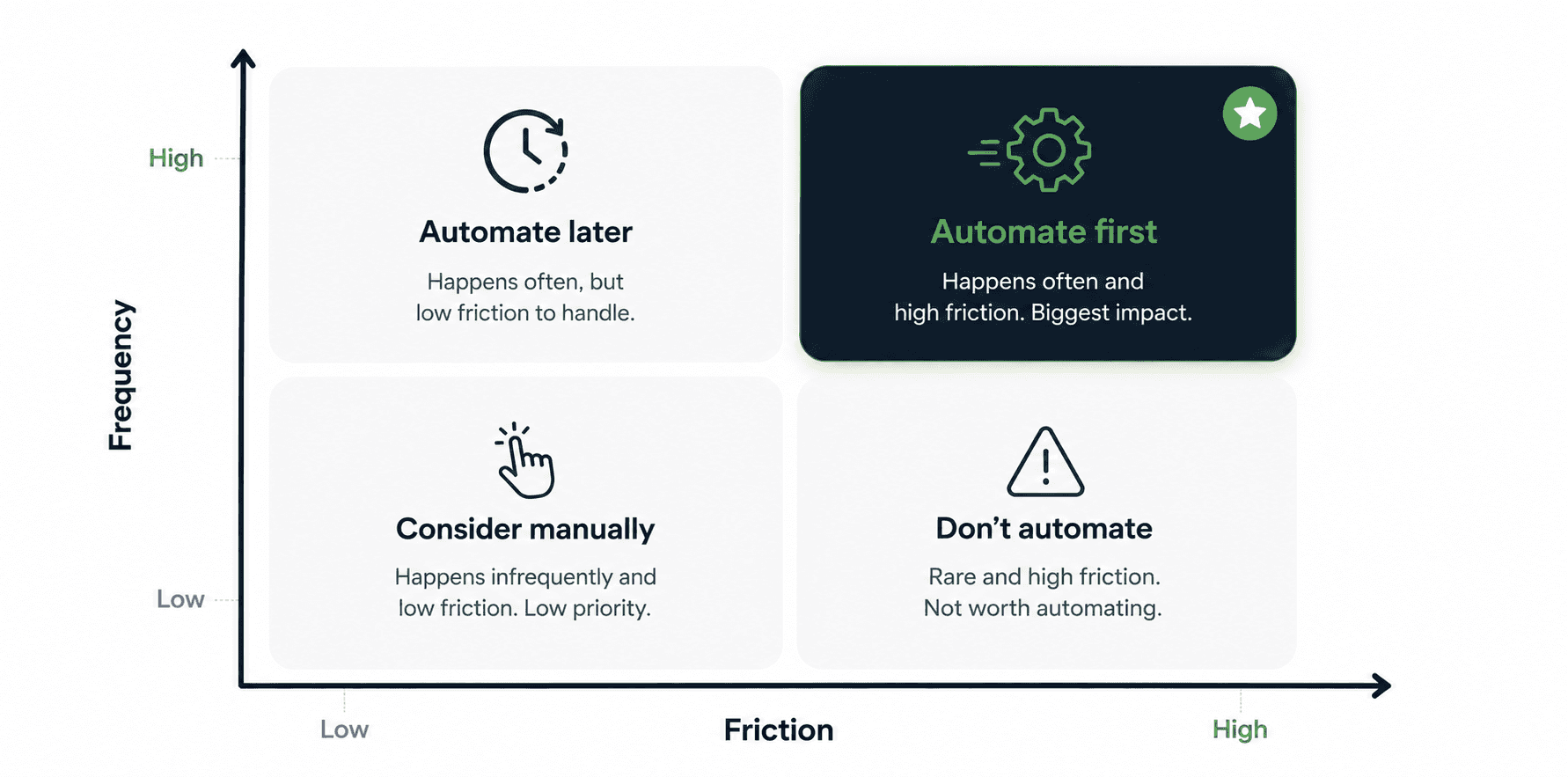
You don't need to overhaul everything at once. Start with the process that causes the most pain the most often — usually onboarding, handoffs, or reporting, and document it as it actually happens today, flaws included. That single source of truth becomes the foundation everything else gets built on.
Outgrowing your operations isn't a failure. It's evidence you're growing. The businesses that scale well are the ones that treat it as a signal to build, not a fire to put out and forget.
Share It On:
Join my newsletter for practical lessons on business operations, CRM, systems, and automation.